
-
How far back in time can you understand English?
The same passage written in 100 year intervals, here’s how English in the year 1000 reads:
And þæt heo sægde wæs eall soþ. Ic ƿifode on hire, and heo ƿæs ful scyne ƿif, ƿis ond ƿærfæst. Ne gemette ic næfre ær sƿylce ƿifman. Heo ƿæs on gefeohte sƿa beald swa ænig mann, and þeah hƿæþere hire andƿlite wæs ƿynsum and fæger.
-
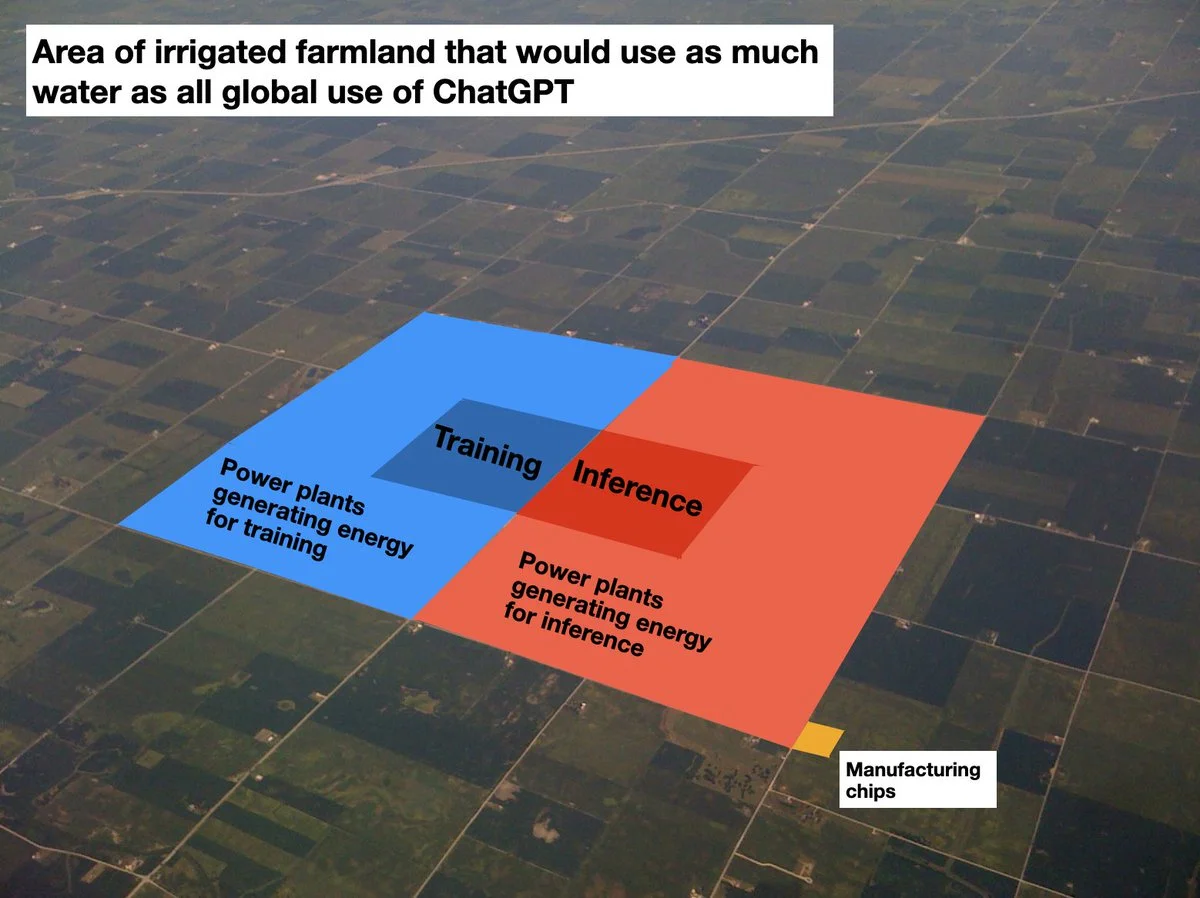
Area of irrigated farmland that would use as much water as all global use of ChatGPT.
-
The decadelong feud shaping the future of AI.
Altman called Dario and Daniela into a conference room and accused them of plotting against him by encouraging colleagues to send negative feedback about him to the board. The brother and sister denied it.
Altman told them he had heard about it from another top OpenAI executive. Daniela called that executive into the room, who said she had no idea what Altman was talking about. Altman then denied that he had said it, prompting the Amodeis to begin shouting angrily at him.
-
Chimpanzees are really into crystals.
-
UK’s speech prosecutions vs the USSR under Brezhnev.
Annualized, UK speech prosecutions are running at about 17x those of the Soviet Union under Brezhnev. Of course, the USSR had 4x the population, so more like 68x the prosecutions/person*year.
-
I improved 15 LLMs at coding in one afternoon. Only the harness changed.
-
Podcast: Jeremy Howard is bearish on LLMs.
But any time I’ve made any attempt to getting an LLM to like design a solution to something that hasn’t been designed lots of times before, it’s horrible. Because what it actually, every time, gives me is the design of something that looks on its surface a bit similar. And often that’s gonna be an absolute disaster, because things that look on the surface a bit similar and like I’m literally trying to create something new to get away from the similar thing.
-
Video: Terence Tao formalises a proof in Lean using Claude Code.
-
How an unappetizing shrub became dozens of different vegetables.

-
Being John Rawls.
-
Book Review: Boyd by Robert Coram.
I think there’s a lesson here about technology more generally: after a major new breakthrough happens, there is often a ridiculous amount of low-hanging fruit lying around in nearby parts of the tech tree. Near the frontier, small teams of amateurs and gentleman scientists still have some hope of beating the professionals. Near the frontier, not all the alpha and not all the slack has been squeezed out and devoured by Moloch. It is actually inspiring and exciting that one guy who hadn’t graduated college could figure out that everybody else was thinking about airplanes all wrong. Imagine what’s out there for you to figure out today!
-
The case for the F-35.
Given that in Vietnam, 85% of aircraft shot down never saw their attacker, this gives the F-35 a huge advantage in air combat.
-
Microbubbles deliver drugs by bursting on command. As they burst open, they briefly force open biological barriers that are otherwise impenetrable, such as the blood-brain barrier, allowing treatments to pass through. The force of their bursts can even be the treatment itself, as they could also be used to break apart kidney stones.
-
Airfoil by Bartosz Ciechanowski.
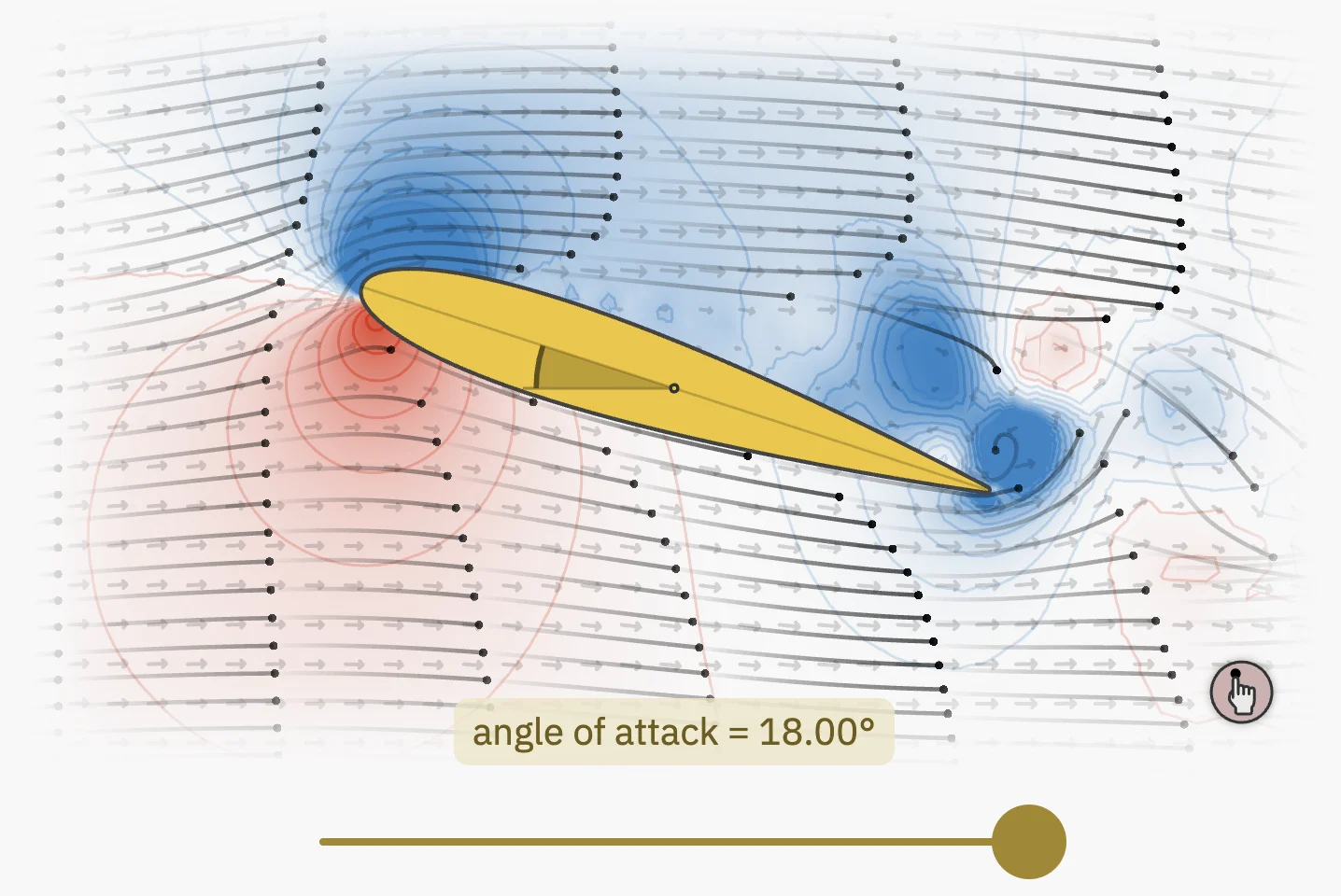
At room temperature the average speed of a particle in air is an astonishing 1650 km/h.
-
Age of Invention: why Scotland succeeded.
-
Why modern Chinese is just ‘English with Hanzi’.
Lu Xun 鲁迅 argued that Chinese vagueness was a national defect. To fix it, he believed translators should import the complex, convoluted sentence structures of German and English directly—even if it made the Chinese painful to read. His logic was brutal: the pain means it is working. The goal was to physically alter neural pathways, forcing Chinese readers to navigate the rigorous logic of a Western scientist.
-
Why I Write by Orwell.