-
John von Neumann shot lightning from his arse, and rebuttal #1 and rebuttal #2.
-
Inside Cursor.
Pace and work ethic are among the most contagious norms (in both directions): If your colleagues move fast, you do. If your colleagues are responsive on Slack, you are. If your colleagues go home for dinner, you do. If your colleagues come into the office on Saturday, you do. The default setting at Cursor is fast. And most people are happily, not begrudgingly, excited to meet the demand.
Fuzz is my favorite Cursor ritual. When a big ship is imminent (think a new client release or website update), everyone gets in a room and tries to break it.
-
TPUv7: Google takes a swing at the king.
We assume that in the case where Google earns a margin on leasing TPU 7 to external customers that the TCO per hour can still be up to ~30% lower than the cost of the GB200 and ~41% lower than the cost of the GB300. This is what we believe is reflective of Anthropic’s pricing via GCP.
-
The political gap between AIs and citizens.
The leaderboard below ranks each AI model by how closely it predicted actual election results.

-
Confederate monuments and performative violence.
Study claims that Confederate monuments reduced racial violence by serving as a substitute for it; when there was a Confederate monument in town, Southerners felt less need to enforce white supremacy in other ways. Therefore, removing racist monuments increases anti-black hate crimes.
-
Gypsies and Jews.
The key detail here is that gypsies selectively desist in identifying as gypsies. Those who advance in the educational system are more likely to stop identifying as gypsies; those who move into higher-paying, more prestigious jobs are more likely to do the same. In fact, more than half of gypsies who become professionals change the way they identify themselves—they claim that they’re members of some other ethnic group.
-
A story of slavery in modern America.
One day during the war Lieutenant Tom came home and caught my mother in a lie—something to do with a boy she wasn’t supposed to talk to. Tom, furious, ordered her to “stand at the table.” Mom cowered with Lola in a corner. Then, in a quivering voice, she told her father that Lola would take her punishment. Lola looked at Mom pleadingly, then without a word walked to the dining table and held on to the edge. Tom raised the belt and delivered 12 lashes, punctuating each one with a word. You. Do. Not. Lie. To. Me. You. Do. Not. Lie. To. Me. Lola made no sound.
My mother, in recounting this story late in her life, delighted in the outrageousness of it, her tone seeming to say, Can you believe I did that? When I brought it up with Lola, she asked to hear Mom’s version. She listened intently, eyes lowered, and afterward she looked at me with sadness and said simply, “Yes. It was like that.”
Lola never got that allowance. She asked my parents about it in a roundabout way a couple of years into our life in America. Her mother had fallen ill (with what I would later learn was dysentery), and her family couldn’t afford the medicine she needed. “Pwede ba?” she said to my parents. Is it possible? Mom let out a sigh. “How could you even ask?,” Dad responded in Tagalog. “You see how hard up we are. Don’t you have any shame?”
-
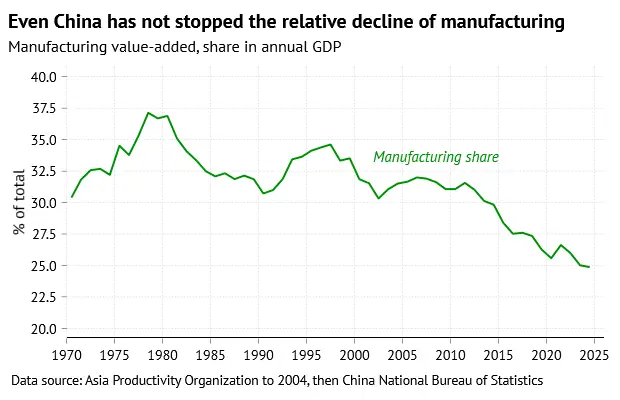
China bows to de-industrialization.
-
Red Alert 2: Chrono Divide
-
Can you just do things? and do it anyway!.
The idea that intelligence is not what matters because intelligence is becoming cheap is growing. So there has to be something else that we can rely on, as humans, to supply a sense of control or meaning to life. Part of the enthusiasm about agency emerges from that perspective.
-
Only the French held out, hoping that Paris Mean Time would be the global standard for almost three decades after. They finally relented in 1911, but even then refused to acknowledge GMT, referring to it instead as Paris Mean Time and running the country nine minutes and 21 seconds ahead of Britain.
-
Why the West was downzoned.

-
Anduril: The amusement park for engineers and setbacks from drone crashes.
What made this work was our matrix organization. Instead of creating dedicated teams for each product, we built functional organizations (across electrical, mechanical, and embedded systems) with deep expertise that could surge resources toward critical projects when needed. When we began developing Roadrunner, we pulled engineers from electrical and mechanical pools for intensive development, then shifted them to other projects when those phases ended.
-
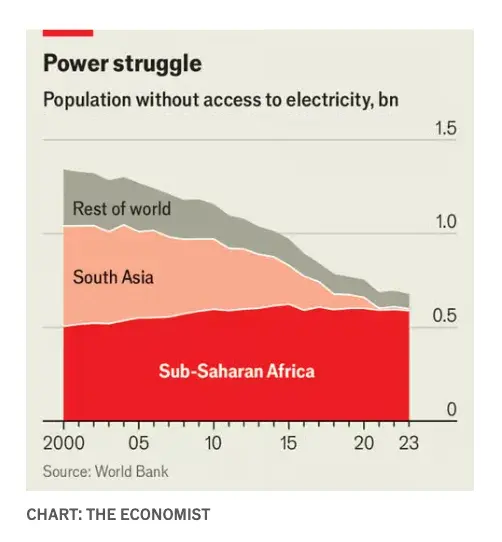
Africa needs to generate more electricity.
-
Concerns about the legitimacy of Nucleus Genomics.
-
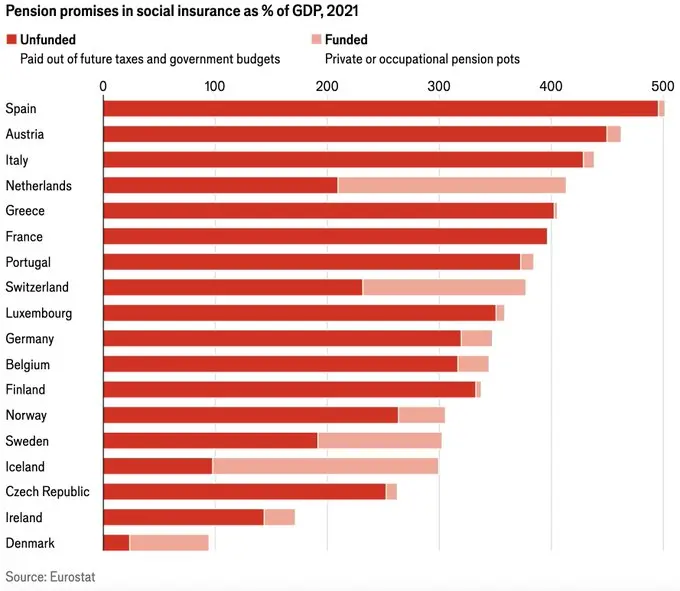
European pension promises as % of GDP.
-
Norway’s wealth tax unchains a capital exodus.
The recent wealth tax increase in Norway was expected to bring in an additional $146M in yearly tax revenue. Instead, individuals worth $54B left the country, leading to a $594M loss in yearly wealth tax revenue—a net decrease of $448M+.
-
Governments spend far more on old people than children: Spain and Britain.
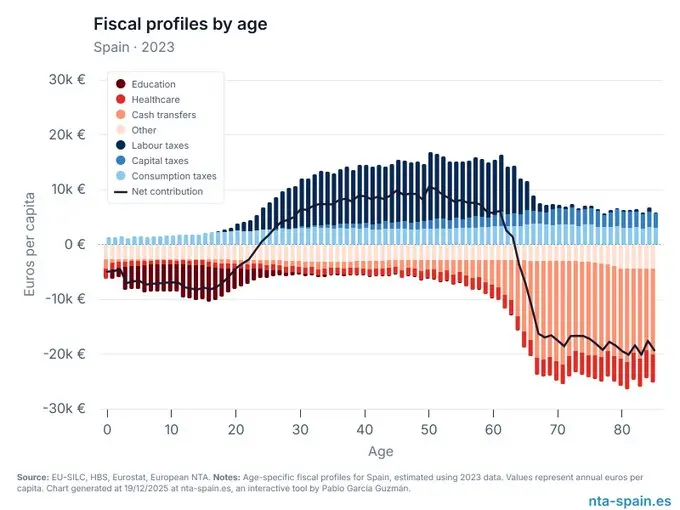

-
Joshua Kushner on navigating complex situations.
“My advice to you and your team is to just be yourselves,” Rubin explained. “Because if you do what you think the rest of the world wants, one of two things will happen. You might be right, but if you are, you won’t really know why; and if you’re wrong, you’ll be angry at yourself for deviating from what is true to your core. So just be yourself, and either you’ll be right, and it’ll feel really good; or you’ll be wrong. But at least you’ll still be yourself.”
-
The untold story of how Jeffrey Epstein got rich.
While there, he spent more than $10,000 on jewelry and clothing for his latest girlfriend — and charged it to the firm. The accounting department noticed the payments and flagged them to the financial controller, who quickly concluded that the expenses were improper, according to a person with direct knowledge of what happened. The controller reported the matter to Greenberg, by then the chief executive. Once again, there were no consequences.